The Ins and Outs of Men's Victorian ClothingLayers, layers, layers!
Men's clothing was not simply "throw on a shirt and pants;" it was much, much more complex. For your sake and mine, however, I'll simplify things (if you require more specific information, need help with something, or just have a question,
PM me and I'll do my best to sort things out).
Now, to make this simple, we will begin at the top and move down --that is, we will begin first by discussing hats, and move down through the garments until we reach shoes. Also, please bear in mind that this "guide" focuses mainly on the fashion of the times --that is, what the rich, upper classes wore --not what was considered every day clothing for less fortunate souls; regardless of that, however, it will still give you an idea as to how people dressed during the Victorian era, and you may draw invaluable ideas from it, so please do read on.
Gentlemen! Your [[uniform]] will include a coat, a waistcoat, and pants. Don't make us repeat that your character will be wearing just about everything on this list rather often.A reminder about clothing: your character will not have a large wardrobe unless he brings a lot of clothes from home. Middle class families during the Victorian Era could afford only a few sets of clothes; lower class and peasant families could hardly afford clothes, and usually kept the same ones and altered them as necessary to save money. Nobles and very well-to-do families would have more clothes, but remember that your character's clothes are not his most important belonging! (Please, don't forget to leave home without them, however.)The HatUntil well into the twentieth century, it was considered both uncouth and disturbing to appear in public without a hat. For any prospective gentleman, a hat was as necessary as any other article of clothing, regardless that he was obliged to remove it on many occasions throughout the day. There were several (I use the term loosely) styles of men's hats in the Victorian Era. For the purposes of discussion, I will cover only the Bowler and Topper styles in depth.
Bowler Hat - The bowler hat was a general purpose men's hat that was acceptable wherever hats were needed (excepting only the most formal of formal occasions, such as knighting ceremonies, etc. As an exception, bowler hats were permissible at funerals.) The bowler hat has a distinct design that stands out among the hats of the time. Like a top hat, the bowler rests above the ears and sticks up above the top of the head. A typical bowler has a thin brim that runs the entire circumference, and covers the head in an even dome that looks much like half an egg. Bowler hats came in many colors, and were considered fashionable day hats that didn't sacrifice any of the formality a hat was supposed to convey.
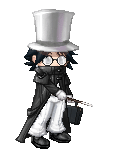
Top Hat - Also called "toppers," top hats were the hats among hats. Considered the most acceptable hat for any event, the top hat was an instant proclamation of wealth status. They came in various heights, but a top hat that was any color but black or brown was rare (the most common exception being white, and those were considered less formal than bowlers, with other variations acceptable as costume hats only). The top typical top hat has a thin to medium width brim that runs the entire circumference and rests atop the ears. The hat then protrudes from the top of the head a respectable height (one to four inches was considered fashionable) in a cylinder that terminates in a plateau, much like an upturned can.
HairBelow the hat, of course, is the hair! A gentleman was expected to be a well-kempt, dashionable man, and his hair was as much a part of his look as the rest of him. Fashionable men's hair was short to medium-short in length (by that, I mean no more than three inches), and hair longer than four inches was considered highly irregular. A gentleman's hair was expected to be well cared for and not draw attention. Of course, that does make it difficult to include an unusual hair dye in your male character design. As we must relax several of the Victorian norms to fit our setting, please consider that an unusual hair color (such as orange or blue) will be perceived as such, but that I would recommend you not worry too much about it (that to both perceiver and perceivee).
...yes, you will ignore my made up words and spelling mistakes. =p
In addition to the hair atop one's head, many gentlemen had to condend with a fast-growing crop of facial hair. A gentleman was not expected to trim his facial hair in any particular style (and, with few exceptions, no style was considered less fashionable than another). He was, however, expected to tend his facial hair and make sure it was presentable. Stubble was considered rogueish and, therefore, unfashionable. A clean shaven gentleman was not regarded as inferior to a bearded gentleman, but a beard or moustache did (and still does) convey a certain sense of power in an individual, and you should take that into consideration.
For your consideration: Beards.orgThe CoatIn the Victorian Era, a man’s coat was a function piece of clothing that still had an immense impact on his fashion. A fashionable man was expected to have several different coats for just about every occasion. I will enumerate, in moderate detail, the following: day coats, sport coats, traveling coats, and the dinner jacket. The coat was worn over the other articles of a gentleman’s clothing
The Day Coat – The day coat is not a particular style
per se, but defines a genre of men’s coats. A day coat was the coat that a man would wear outside or in the company of un-introduced persons, and could resemble any of the other coat styles from traveling coats to dinner coats. A typical day coat might have several buttons and pockets, and would match the rest of the man’s outfit in color and style.
The Sport Coat – A sport coat was simply a slightly more formal version of a day coat, and was permissible during the sport of polo in lieu of a riding coat. Often, a sport coat resembled a mix between a riding coat and another style of coat, which explains its versatility for both sporting and jaunting.
The Traveling Coat – While not always heavy, a traveling coat was worn on long journeys and was considered very informal. Typically, a traveling coat would have only one pocket on the outside (whereas most other styles had two), and was made of a material that was more durable than the thin fabrics used in formal clothing.
The Dinner Jacket – Dinner (or supper, for those who prefer the term) was often considered the most formal event of the day, as friends and strangers gathered about the same table to share a meal and light conversation. With the formality of a dinner, came the formality of yet another coat. Dinner coats were meant to be worn inside, and so were made of very thin, lightweight fabrics with elaborate details not seen on day coats and the like. Dinner coats were never ostentatious, however, and came in a variety of colors, which were usually muted so as to not draw unwonted attention. [[Do note that a Tuxedo coat, as it is called in the US, was called a Swallowtail Jacket in Victorian England]]
The WaistcoatConsider a vest: a form-fitting article with no sleeves and no collar worn over the shirt. That is a waistcoat, and it was integral to every gentleman's outfit.
The Shirt and CollarShirts had buttons, but more importantly, they had collars. The shirt was pretty much the same back then as it is today; just think of button-up polo shirts or dress-shirts for the short and long-sleeve varieties respectively. Most important about the shirt, however, was the collar. The collar could be worn in many, many different styles, and boasted a fine place for additional accessorizing through a cravat or similar article. Often, the way a gentleman wore his collar was an identifying personal habit that he kept with him in most, if not all, of his outfits.
The Cravat - A cravat is a simple band of cloth that can be tied in various fashions. It covers most to all of the neck and can be decorated in any number of ways.
The Bow Tie - A descendent of the cravat, the bow tie was considered moderately formal during the Victorian Era, but permissible in formal settings as well. It can be tied in only one fashion.
The Four-in-Hand - Four in hand is the Victorian Era name for the modern necktie; it was named such for the peculiar knot in which it was tied. It can be tied in several fashions with varying degrees of formality.
The Ascot - I have no earthly idea where to begin with the Ascot.
The Wikipedia article will do a much better job than any attempt I could make, I'm certain.
PANTS! Well, Trousers, Actually.In Victorian England, there were two lengths of trousers: long trousers, and short trousers (fancy nomenclature, no?) You wouldn't be seen in public without pants (or proper covering, I would hope) and doing so in Victorian England was likely to get you locked up in the county jail or a looney bin --your pick.
Long Trousers - Long trousers were of the length and make of modern day slacks.
Short Trousers - Short trousers were not short by today's standard. Worn exclusively by the lower classes excepting in costume for the upper classes, short trousers were were trousers that came only halfway down the shins. If one were fashionably inclined, short trousers would be worn with tall socks or even --gasp! --hose. Although typically made of rougher materials, short trousers that were made for costumes were made as any other costume article would be.
ShoesAt the risk of sounding like a 1950's radio commercial: sensible shoes. A gentleman was expected to have good taste in shoes, but the shoes were never to be the centerpiece of his dress. A good shoe was one that did not draw attention, but had a style nonetheless. A gentleman was expected to have good taste in shoes, and most others would notice both extremely expensive or extremely shoddy shoes immediately. That said, however, your character probably has shoes that are more for comfort than for style, and you should always take economic class into consideration.
OtherJust like ladies, a gentleman could boast some types of jewelry. It was never considered fashionable for a gentleman to wear much jewelry, though a gentleman had many opportunities (and true, much reason) to sport some. I will go over typical jewelry articles and how they applied to gentlemen in particular.
Rings - A gentleman was expected to never wear more than two rings at any one time; furthermore, a gentleman's rings were only permissible as the following: a monogram (or signet) ring, worn as a distinctive symbol; or a wedding ring to the woman he was most recently wed. Wearing additional rings was considered gaudy and uncouth, and even beyond that, if either of his rings were overly showy, a gentleman was apt to invoke rebuke in others.
Necklaces - A gentleman was never expected to wear a necklace openly with one exception. A gentleman was allowed to openly wear a necklace of religious importance (ie a Crucifix or Star of David), but even such icons were considered unfashionable (and, indeed, insulting when worn by unreligious gentlemen). As with any secret article, a gentleman was free to wear whatever he chose in a manner as would not display to others (for example, he might wear a necklace beneath his shirt).
Brooches - A brooch was considered women's jewelry, as necklaces were. There were, however, several styles that were permissible for men, although they were closer to button covers or ascot pins than actual brooches.
Button-Covers - A gentleman was allowed to cover the buttons of his clothing in whatever manner he wished, provided, of course, that his button covers be less than attention-demanding like the rest of his jewelry.
Cufflinks - Men were allowed cufflinks, as an open cuff was considered slovenly behavior.
Earrings - A gentlman was never allowed to wear earrings; they were solely women's jewelry.
Hair Pins - Hair pins were a women's style; a man with hair pins would be a most peculiar sight, and likely looked down upon.
Corsages - Although a handkerchief (folded precisely, of course) was considered the more appropriate breast pocket-decoration, gentlemen were allowed to wear flower corsages as compliments to their jackets. Red roses and other, vibrantly colorful flowers were not permissible, however, and any gentleman wearing such a device was apt to be considered looney.
[[If you feel more could be added anywhere to this guide, please do not hesitate to inform me via PM. Your help is greatly appreciated, as it is a lot of work to put all this together.]]




 Reply
Reply
